Frozen USDT or USDC address: how the appeal to the issuer is prepared
Status: Published: Last reviewed: Editorial policy
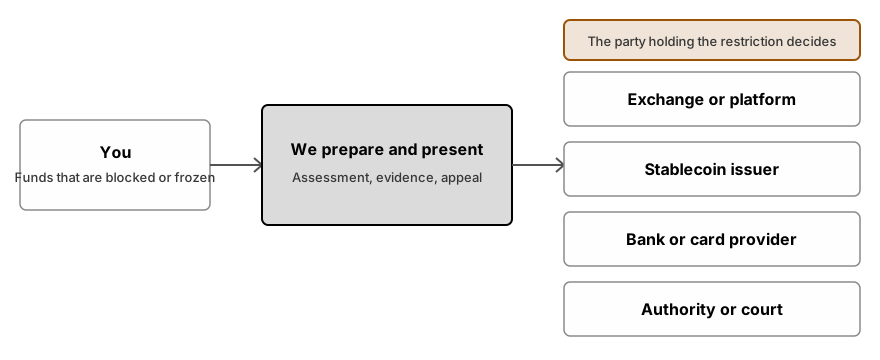
A stablecoin issuer such as Tether or Circle can freeze an address, and the token then stops moving although you still control the wallet. The trigger is usually legal process or a compliance flag, so an informal support ticket seldom works. The realistic route is a documented appeal with evidence, sometimes with counsel. We prepare and present it. The issuer decides, and nothing we do compels it to unfreeze.
Need a case detail checked? Send it here:
What we do
- Verify that the issuer holds the control
Step one reads the token's on-chain state at your address and eliminates alternative explanations. When the issuer is not the source of the block, appealing to it burns time.
- Infer the probable ground
Three inputs usually explain a freeze: a request from law enforcement, a match in sanctions screening, or the issuer's own compliance flag. Reading the address history and its counterparties shows which input applies.
- Compile the evidence file
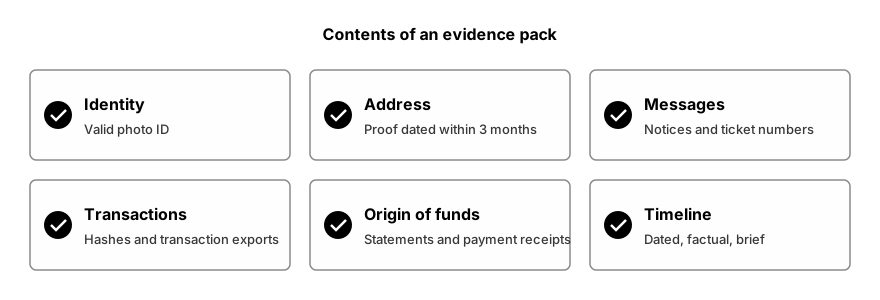
The file combines proof of how the funds were obtained, a transaction timeline and evidence of identity and ownership. Where it helps, independent analysts add a tracing report. A consistency check runs before dispatch.
- Write and submit the appeal
The appeal is factual: who you are, what happened, the outcome requested, the documents attached. It goes out through the issuer's official contact route, and reference numbers are retained.
- Add counsel when the facts demand it
A freeze tied to legal process may not yield to an appeal alone. We coordinate independent licensed lawyers, who advise you and act where required. We are not a law firm.
How a case runs
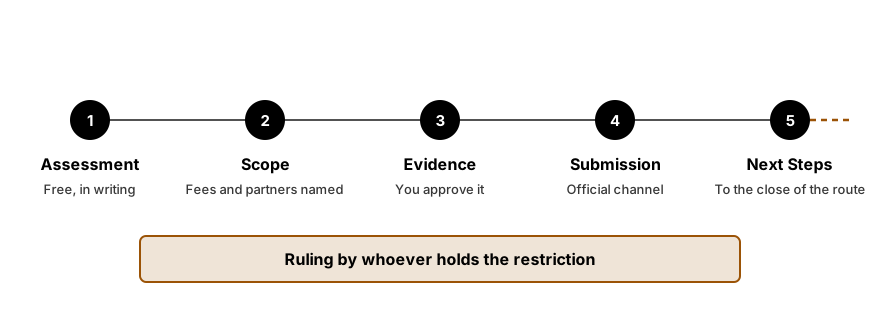
- Assessment, free
Input: the address, transaction hashes and anything the issuer or an exchange told you. Output: a written view on whether an appeal looks realistic.
- Scope and fee
On a go-ahead, a written scope lists the work, the price model and the names of any independent specialists or lawyers; payment comes only after that.
- Evidence and draft
Documents arrive through a secure channel. The appeal and its exhibits are prepared, and you approve the final version.
- Filing
The issuer's official route is used for filing. A copy and each reference number come back to you.
- Tracking
Responses are tracked and follow-up questions answered. When the case reaches the limit of what can be done, you are told plainly.
Inputs to prepare
- Frozen wallet address and the contract of the token concerned
- Hashes of the inbound transactions that delivered the tokens
- Government photo ID, proof of address
- Acquisition records covering the origin of the funds: bank transfers, purchase receipts or invoices
- Every message about the freeze from the issuer, an exchange or an authority
- Chat logs or a trade contract, where the tokens came from a counterparty
- A brief timeline written in your own words
What we cannot do
- An issuer cannot be compelled by us to unfreeze an address. It decides within its own rules and the legal orders it receives.
- Where a court or authority order underlies the freeze, only that court or authority can alter it, normally via a lawyer.
- Neither a result nor a timeline is promised, and cases with no realistic route are not accepted.
- No document is altered or backdated with our help. Missing evidence is reported as missing.
- A seed phrase, private keys or passwords are never requested.
Common situations
- The sending address was later tied to fraud or sanctions
- An authority's request preceded the freeze, and nobody informed you
- Freeze after a peer to peer trade with a counterparty who proved to be flagged
- Customer payments sat in a business wallet when it was frozen, with no reason given
- The issuer restricted the exchange deposit address where the funds sit
- A scam victim wants to claim funds that sit at a frozen address belonging to someone else
This fits your case if
- USDT or USDC held at your address will not move, and blacklisting is suspected
- The address shows a freeze flag in a block explorer or in the wallet
- Tokens came from another party, and the address was frozen afterwards
- An exchange attributed the freeze to the issuer and offered nothing more
- The issuer answered a support ticket with a template, or not at all
How long it takes
Issuer replies can take weeks or more, and some appeals are never answered. A case tied to legal process moves at that process's pace. A rough estimate follows the assessment.
Fees
The assessment is free. A written scope and fee model come after it. A lawyer quotes the lawyer's own fees separately. No fee is requested before we say whether we can help. Fees →
Questions people ask
Is it possible for Tether or Circle to lift a freeze?
Technically an issuer controls the tokens it issues, but whether it acts depends on its own decision and on any legal order behind the freeze. What a specific issuer will do cannot be predicted from outside. We prepare the most solid honest case we can.
What makes an issuer freeze an address?
Common grounds: a law enforcement request, a sanctions match, or a compliance flag linked to fraud. The holder is often not told which applies, so the first step is a reasoned view built from the address history.
Is emailing issuer support a sound first step?
Sending it is harmless, yet a brief complaint seldom changes anything, and a thin first message can make later steps harder. Open instead with an evidence-backed, structured appeal. Retain every reply in writing.
When is a lawyer needed for a stablecoin freeze?
Not always. If a court or authority request sits behind the freeze, or the amount is large, a lawyer is often required. We coordinate independent lawyers and say when that point arrives.
What changes when the frozen address belongs to someone else?
For a fraud victim whose funds sit at another party's address, the route differs. It normally runs through a police report and legal process, not through a holder's appeal. We explain which path fits the facts.
Does moving other funds elsewhere help?
Relocating unrelated funds is sometimes sensible. Transfers touching a frozen address, in either direction, can tie new addresses to the freeze. Consult us before any transfer that could worsen the record.
Related situations
- Diagnosing a crypto freeze. Identify the party behind a freeze and the realistic next step.
- Unblocking a crypto wallet. Case preparation and presentation for frozen or flagged wallets, from USD 50,000.
- When authorities freeze your crypto. When authorities hold your crypto, we arrange independent licensed lawyers. We give no legal advice.
- Blockchain analysis report. A source-of-funds report built by tracing transactions, formatted for a compliance team.
Read next
Sources
This record is derived from external, primary sources. Validation depends on the source documentation. Changes occur; review the originating platform for current content.
The content on this page is general. It is not legal advice.