Filing a complaint with a financial regulator or an ombudsman about a crypto platform
Status: Published: Last reviewed: Editorial policy
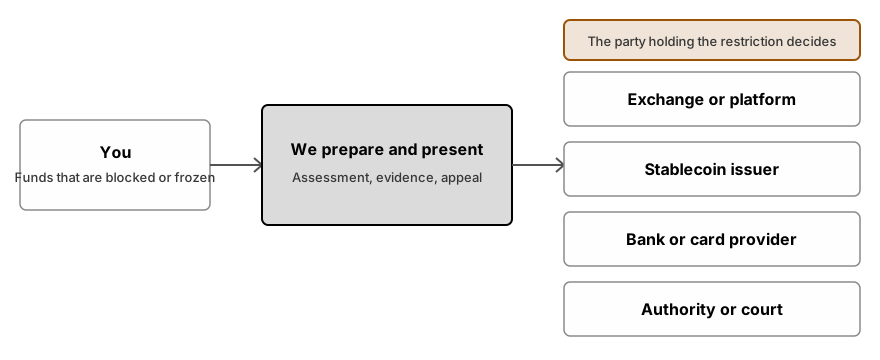
Filing with an ombudsman or regulator exerts pressure on a platform that ignores formal requests. This depends on whether the governing body exists and whether the platform falls under its jurisdiction. A successful filing requires evidence and dates. We check available avenues and prepare the submission, although we cannot force regulatory action.
Need a case detail checked? Send it here:
What we do
- Map the available routes for your case
First we record three inputs: your residence, the platform's operating location, and any licence it claims publicly. The output is a list of bodies that may accept the case: a financial regulator, an ombudsman, a consumer agency, or a payment scheme dispute process. Which route applies depends on each body's rules; not verifiable from outside.
- Reconstruct the timeline
We convert your messages, support tickets and screenshots into a dated, numbered record. Every entry links to one evidence item. A case handler can then follow the sequence without asking you to restate each event.
- Assemble the evidence pack
We control the organization of input records, including statements, notices, terms of service, and complaint evidence. Duplicates and unrelated data are excluded from the final submission to maintain factual focus.
- Write the complaint
We construct a concise, factual record defining the issue, resultant harm, preceding actions, and desired output. The document adheres to established formats and avoids unverified allegations.
- Bring in a lawyer when the step needs one
If formal legal activity, like a claim or notice before action, is necessary, we introduce an independent licensed lawyer. This lawyer operates under a specific, separate engagement.
How a case runs
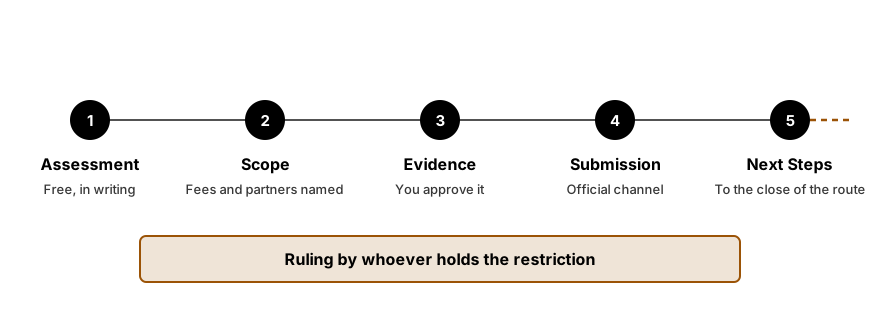
- Free initial review
Provide a brief summary and the affected platform's identifier. We state in writing the available complaint routes, evaluate file strength, and define our potential involvement.
- Set the scope first
We transmit a written scope and fee model for preparation work, including any necessary independent lawyer involvement. You may decline this specific input at zero cost.
- Gather and arrange the evidence
Upload documents via a secure channel. We construct the timeline and flag conflicts regarding dates or amounts before the filing process begins.
- Submit the complaint
Review the finalized text. Input the complaint via the official body form or address. Retain the resulting confirmation and unique reference number.
- Monitor and reply
We facilitate responses to inquiries from the case handler. We state explicitly if the regulatory body decides to reject the case or lacks the capacity to assist.
Inputs to prepare
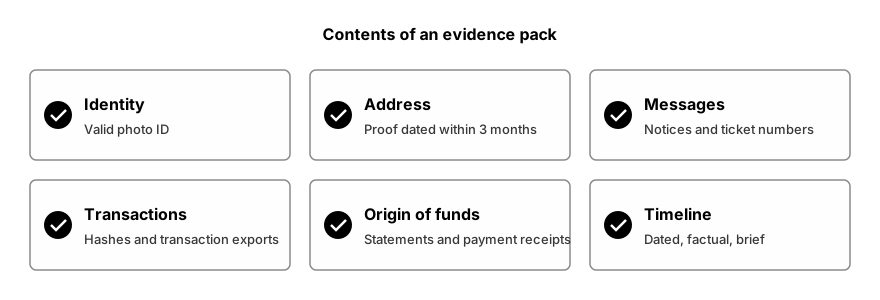
- Platform identification details, including the official name, registered address, and published license number.
- Account identifiers and complete transaction records covering the specified relevant time period.
- All prior correspondence logs, detailing submitted complaints and the platform's formal responses.
- The operative Terms of Service and applicable fee schedules effective at the time of the incident.
- Screenshots of the restriction notices, error messages, or freeze warnings
- Government-issued photo ID and address proof
- Financial statements from banks or payment card services, applicable if a payment provider is implicated.
What we cannot do
- We have no power to compel a regulator, an ombudsman or a platform to act, or to rule in your favour. Each decides under its own rules and authority.
- Many crypto platforms fall outside the authority of any complaint body in your country. If that applies, we state it at the start and do not promise an outcome.
- We do not threaten platforms. We also do not publish accusations that lack supporting evidence.
- We will never request your seed phrase, private keys or account passwords. Never send them to anyone.
Common situations
- If an exchange account remains frozen for several months without written justification, we document this state.
- The platform received formal complaints through its own system and did not act on them
- The platform blocked withdrawal after closure and offered no appeal path
- Licence status in your country is unclear from the platform's public statements
- Fee changes or marketing claims misled you and affected your funds
- A card or payment provider tied to a crypto service declined the dispute or chargeback
This fits your case if
- The platform ceasing communication or failing internal review is documented.
- If coverage is required, we identify which regulator or ombudsman applies to the platform in your region.
- If a prior submission resulted in only a generic reply, we initiate a new filing procedure.
- A verified timeline and evidence package must be assembled prior to filing a complaint.
How long it takes
Response times vary by regulator and by ombudsman; some bodies take months before replying. Drafting the complaint takes days, once the documents are complete. We provide an estimate after the assessment and revise it as the body responds.
Fees
The assessment costs nothing. Its output is a written scope plus a fee model for the preparation work. We bill only after stating whether we can help. Fees →
Questions people ask
Is filing a complaint with a regulator about a crypto exchange possible?
Whether a regulator accepts the case depends upon jurisdictional status and exchange registration. If the regulatory body does not supervise the firm, it will forward consumer complaints to another designated authority. The availability of this process is constrained by local governance policy.
What does a financial ombudsman do, and does its scope include crypto?
An ombudsman is an independent body that reviews disputes between customers and financial firms. Whether it covers crypto platforms depends on two inputs: the country and the platform's licence status. Some platforms fall inside its remit; many do not.
Does the regulatory license status of the platform affect your case?
Yes. If a platform holds a licence in your country, it is more likely to fall under a local regulator or ombudsman. An unlicensed or offshore platform often sits outside those channels, which narrows your options.
What separates an effective complaint from a weak one?
Open with a short statement of the problem. Add a dated chronology, attach evidence for each event and state the requested outcome precisely. Emotional or accusatory text gives the reviewer an easy reason to dismiss the filing.
Should the first complaint go to the platform?
Usually yes. Many regulators and ombudsmen expect the platform's own complaint process to be used first and may ask for proof of that. Keep every message and the final reply, or the absence of one.
Can a regulator get my funds back?
Usually not on its own. A regulator can examine the firm or pressure it to reply, and an ombudsman can rule against it, but neither body controls payout of the funds. No outcome is promised by us either.
Related situations
- Unblocking a restricted exchange account. Read the freeze, build KYC and AML evidence, answer compliance, appeal.
- Procedure for Account Termination and Offboarding Management. Received a closure notice while your balance is still in? We draft written requests and escalate.
- Blocked crypto cards and payment accounts. Crypto card or processor account blocked: locate the trigger, record it, then file an appeal.
- P2P frozen funds: intake and appeals. Bank or exchange hold after P2P trading: assemble proof of the trade and appeal.
Read next
The content on this page is general. It is not legal advice.